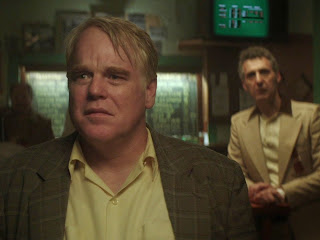
MONEYBALL (2011)

Directed By: Bennett Miller
Written By: Aaron Sorkin And Steve Zaillian 
Story By: Stan Chervin
Based on the book “MONEYBALL: The Art Of Winning An Unfair Game” by: Michael Lewis 
Cinematography: Wally Pfister
Editor: Christopher Tellefsen 

Cast: Brad Pitt, Jonah Hill, Philip Seymour Hoffman, Robin Wright, Chris Pratt, Stephen Bishop, Reed Diamond, Brent Jennings, Tammy Blanchard, Nick Searcy, Arliss Howard

Oakland A’s GM Billy Beane is handicapped with the lowest salary constraint in baseball. If he ever wants to win the World Series, Billy must find a competitive advantage. Billy is about to turn baseball on its ear when he uses statistical data to analyze and place value on the players he picks for the team.


This film feels like a classic story. It is told simply not in a flashy way with plenty of dramatic scenes and even leaves room for light humor. Though it is intricate in the details and methods it is told. 

It feels like a film that has confidence in itself and how important it is. Whereas for the audience your enjoyment of the film matters in your interest in the subject and even the sport of baseball. As the film feels strong and partially nostalgic about the feeling of baseball and what it represents for some but also represents the players who seemingly

Give their all even when they might have run out of what makes them special, but also by making it more about numbers and probability. While trying to humanize these players it also undercuts them as at times liabilities more than anything. 

Why is it that baseball is the most respected sport when it comes to movies? Even though it is the sort that had a public cheating scandal in its heyday? As it strangely seems to represent Americana. As it has always seemed to be around and played?

Jonah Hill underplays In his role showing he can be quite effective without really doing much and more letting the character stand out for his skills rather than his behavior or words.

Bennet Miller behind the camera directing is always a joy. As he always seems to disappear and once he comes back around to making another film it stands out in many good ways. As they always seem more prestige than anything else. Good but they seem to lack passion or too much emotion. Here he has another home run. 

As a director, he tends to be very atmospheric. Especially when it comes to a consistent tone. As he seems to seek to say so much. While seemingly doing very little but it feels bigger. It’s hard to believe he only came onto this project after Director Steven Soderbergh left the project. 

This is one of Brad Pitt’s better performances where he seems to be in a role later in his career. As in the role, he plays it as more neutral, cocky, and as much of a show-off as he has done in the past. Here he doesn’t have to rely on looks, personality, or charm. 

The cast is full of heavy hitters who never let the film or the material down.

As this film is a true story it doesn’t have a storybook ending. But even as it is downbeat it is a quietly satisfying one. 

It not only takes you behind the scenes of the organization but also a great story with real characters going through inner turmoil. Though they stay in check of their emotions, you can read the drama clearly on their faces and in their eyes. 

The story is all about the details that shape and define it. 

GRADE: A

STATE AND MAIN (2000)

Written & Directed By: David Mamet
Cinematography: Oliver Stapleton 
Editor: Barbara Tulliver 

Cast: Philip Seymour Hoffman, Alec Baldwin, William H. Macy, Sarah Jessica Parker, Clark Gregg, Julia Stiles, Patti LuPone, Charles Durning, Rebecca Pidgeon, Ricky Jay, David Paymer, Jonathan Katz, Matt Malloy, Laura Silverman 

Having left New Hampshire over excessive demands by the locals, the cast and crew of “The Old Mill” move their movie shoot to a small town in Vermont. However, they soon discover that The Old Mill burned down in 1960, the star can’t keep his pants zipped, the starlet won’t take her top off, and the locals aren’t quite as easily conned as they appear.


A movie about the behind-the-scenes world of movie making and how it wreaks havoc on a small town and how the town gets seduced to a certain degree. While also throwing in a kind of love story in the middle.

The film’s heart really relies on Philip Seymour Hoffman’s Character a writer. Who is constantly having to change the script due to the whims of the actors, Star, or producer, and when controversy happens he has to decide to do the moral thing or be dishonest but help the production proceed. 

It offers commentary on movie stars and Hollywood at that time. While showing how easy it is to be corrupted and lead astray. How easily tot can get caught up in something you know is wrong for the supposed greater good. 

Yet very few characters seem to have actual emotions and just deliver one-liners at the ready. Especially his love interest played by Rebecca Pidgeon. Making it seem more stage or sitcom ready. Even as it tries to be a morality play but comes off as false. 

While a satire instead of coming across as biting, clever, or even cynical. It instead comes across at times as smug. As half of the humor comes across as an inside joke rather than inclusive. Showing who they prefer their audience to actually be for the film. 

It’s set in a small town yet nothing feels down to earth about it. 

Though when it does work it is on fire. As it works best when it is more of an ensemble. As it is entertaining with sharp dialogue. 

The film has a great cast. It just feels like a bitter pill too much at times, but funny a lot of times. It ends up feeling too theatrical to be natural. 

Though it seems like everyone tries to come off as cool and all-knowing. So it never comes off as exactly identifiable as it seems so practices and knowledgeable 

GRADE: B- 

LOVE, LIZA (2002)

Directed By: Todd Louiso
Written By: Gordy Hoffman 
Cinematography: Lisa Rinzler 
Editor: Katz & Anne Stein 

Cast: Philip Seymour Hoffman, Kathy Bates, Jack Kehler, Stephen Tobolowsky, Erika Alexander, Sarah Koskoff, Kelli Garner 

Following the unexplained suicide of his wife Liza, a web designer turns to gasoline fumes and remote-control airplanes while avoiding an inevitable conflict with his mother-in-law.


Philip Seymour Hoffman takes a stoner character who could have easily been more a comedic performance on any other film. Despite the tragedy that surrounds him and makes him heartfelt and all too human that is recognizable. 

It’s a poignant performance where we find out the cause of his addiction. We see the beginnings and the depths he goes through to feel numb to hide from fears and emotions. After the death of his wife.

It’s a mesmerizing performance that brings an extra sadness knowing his own tragic end in life. Making you wonder how parallel it close might have been to this performance. 

We see his mother-in-law’s emotional reactions. She wants to be nurturing but is also falling apart and is looking to him to help her grieve but finds nothing. 

At times the film veers close to seeming like it will be a quirky slice of life that will teach the character life is worth living and appreciating for so many unpredictable reasons, but the film is smarter than that and brings him back to reality after time to time finding peace on a lark. Like his developing friendship with a fellow recluse. 

The film explores how the world reacts and moves on as normal, but he is stunted or held back in his grief. Whereas his addiction is as odd as it is. Seems to be the only way for him to move forward. Even if in destructive ways. 

It’s a film built more on performances and the strength/Charisma of the lead actor than a conveniently plotted three-act structure.

It’s a lonely journey barely populated but it does certainly meet the characters. Who brings a little definition to a wide-ranging performance and film that likes to wander with no clear path. It constantly feels strong yet singular as one of the fears of the main character is that he caused his wife’s death or he wasn’t good enough for her when she needed him.

These darker films are built on characters and performances. Seems to be like most actors more the type he preferred. That offers a more intimate experience and more richness for an actor to offer. Performances that feel more lived in, like in the film JACK GOES BOATING that can come off as tragedies.

A tragedy, desperation not a movie to see cinematic beauty necessarily more organic. At one point it becomes a road trip movie 

In the end, the film actually does have a symbolic ending. Starting over a new at first thought we should never find out what was in the letter left for him that he carries throughout  but by actually revealing the contents of the letter it allows for closure and an ending of sorts 

Grade: B-

GOD’S POCKET (2014)

Directed By: John Slattery 
Written By: Alex Metcalf & John Slattery 
Based on the Novel By: Pete Dexter 
 Cinematography By: Lance Acord 
Editor: Tom McArdle 

Cast: Philip Seymour Hoffman, John Turturro, Richard Jenkins, Joyce Van Patten, Eddie Marsan, Christina Hendricks, Molly Price, Dominic Lombardozzi, Caleb Landry Jones, Sophie Takal 

When Mickey’s crazy step-son Leon is killed in a construction ‘accident’, nobody in the working-class neighborhood of God’s Pocket is sorry he’s gone. Mickey tries to bury the bad news with the body, but when the boy’s mother demands the truth, Mickey finds himself stuck in a life-and-death struggle between a body he can’t bury, a wife he can’t please, and a debt he can’t pay


This is a film that’s hard to describe as the fact that you have seen stories like this on-screen before. Though this one feels strangely authentic and that is the scary part. As the film is so downtrodden it seems almost the product of nightmares.

Luckily the film stays low-key. It goes by quickly and with nary a kick. Though it takes its time to tell its story. It doesn’t feel like it’s dragging. It’s surprisingly lean, though it feels indulgent. There is no real fat in the film.

The film has an amazing group of actors, who are all good and believable. You only wish the film had more to give them as far as story and quality. While the film relies heavily on the atmosphere it feels at times like it has very few places to go. It presents circumstances and challenges but very little action and story.

This being one of Philip Seymour Hoffman’s last performances it is noteworthy as he is our put upon the protagonist. Trying to figure his way out of an increasingly sticky situation. While also being his own worst enemy. He seems to be one of the few semi-decent characters who while not being from the neighborhood which everyone reminds him. Still seems very much the product of it as he seems to fit perfectly in.

The film is the story of more a neighborhood that seems to be its own trap. We just watch the inhabitants as they go about their day-to-day life. The main story selling point the death of a young man seems to be just one of those things. An act of senseless violence. That seems like it will become some story of the investigation and seeking justice. Though it ends up just being a catalyst for changes and actions for some characters and setting in motion events.

The film seems constantly depressing as the characters seem to always make the wrong decisions and there is little to no humanity. Everyone is out for themselves. Anytime there is humanity shown it is rather surprising and usually followed by acts of merciless violence.

Christina Hendricks continues to come across as a desirable screen icon. She is luminous and beautiful and though she plays a grieving mother. Later in the film, as she seems to be irresistible to any male. She seems oddly emotionless as her character knows better yet is shocked by the attention paid to her. She commits an act but does so with what seems little care. That has incriminating results that she oddly seems to have no concerns about. Though they affect her.

Richard Jenkins truly makes a mark as a columnist in the middle of all this investigation. While being from the neighborhood has his own demons to deal with while trying to get the story. As he is easily distracted and we get some clues for his condition. We observe his questionable prowess with women also.

In fact, the entire third act of the film becomes strange at how quickly the neighborhood turns from favorable to certain inhabitants to just pure hate and the reason seems rather thin. Like it happens more because the script and story demand it rather than naturally or organically.

John Slattery making his feature film debut, Picked an exemplary story to tell. It always seems when actors choose to direct they pick material more character-based and depressing that has to be gritty to bring more of a reality, but smartly pick material that allows for an ensemble to play off of and includes actors friends who are more the character actor types. He could have done slot worse in the material.

The film at times feels like it is trying too hard to be gritty and showcase all his grime and crime. Then at other times it wisely becomes more understated.

The film has a strangely happy ending or as close as this type of film can have.

This is a film that feels in the same world as TREE’S LOUNGE only not as optimistic and also would go well with a viewing of THE DROP only this is less exciting and feels more authentic.

Grade: B-

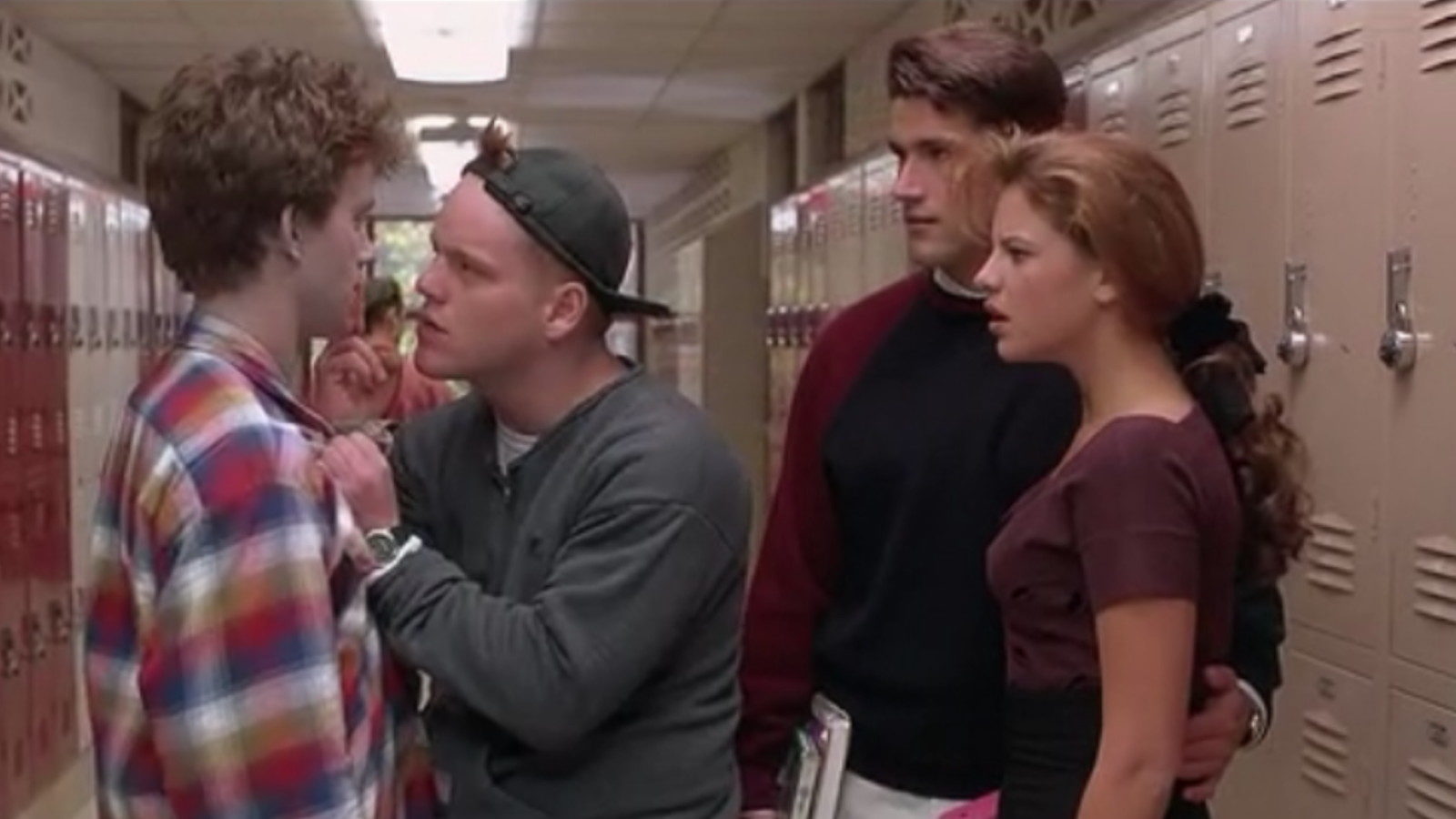
MY BOYFRIEND’S BACK (1993)

myboyfriend_sback1-1600x900-c-default

Directed By: Bob Balaban
Written By: Dean Lorey
Cinematography By: Mac Ahlberg
Editor: Michael Jablow 

Cast: Andrew Lowery, Traci Lind, Philip Seymour Hoffman, Paul Dooley, Matthew Fox, Edward Herrmann, Mary Beth Hurt, Jay O. Sanders, Danny Zorn, Cloris Leachman, Matthew McCognahey 


Missy McCloud is the most beautiful girl in school and Johnny Dingle has been in love with her for years. One night, Johnny is killed trying to win her over, and soon he comes back from the dead, and wins Missy’s heart

Continue reading “MY BOYFRIEND’S BACK (1993)”

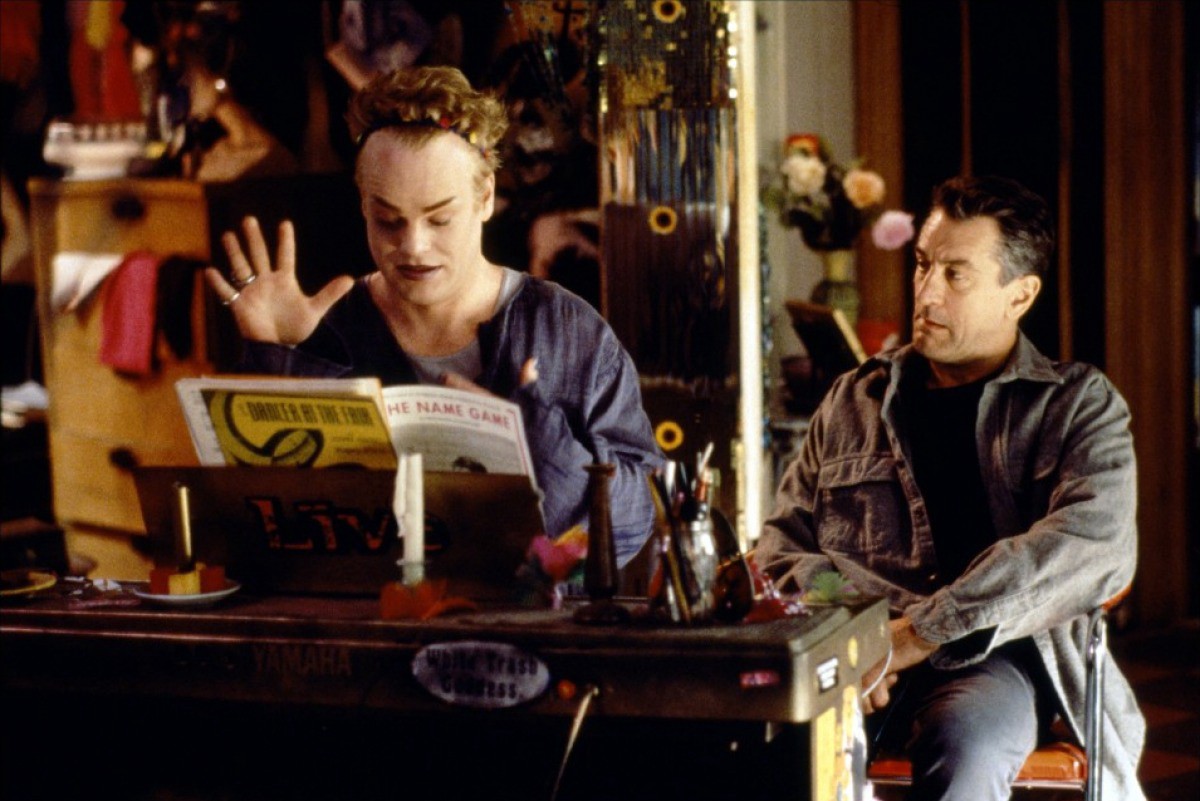
FLAWLESS (1999)

flawless

Written & Directed: Joel Schumacher
Cinematography By: Declan Quinn
Editor: Mark Stevens 


Cast: Philip Seymour Hoffman, Robert DeNiro, Daphne Rubin-Vega, Barry Miller, Chris Bauer, Wilson Jermaine Heredia, Rory Cochrane, Vincent Laresca, Katrina Arroyave, Skip Sudduth, Scott Allen Coopper, Mark Margolis, Wanda De Jesus, John Enos III, Winter Ave Zoli, Joey Arias, Jackie Beat

Walt Koontz, a homophobic guy, ends up with paralyzed vocal cords because of an unfortunate stroke. His therapy includes receiving singing lessons from a neighbor who is not only openly flamboyant but also a pre-op transgenderist. Both of them are equally prejudiced; Koontz against homosexuals and the neighbor against close-minded straight people.

Continue reading “FLAWLESS (1999)”