Cast: Mary Woodvine, Edward Rowe, Flo Crowe, John Woodvine, Joe Gray
Set in 1973 on an uninhabited island off the Cornish coast, a wildlife volunteer’s daily observations of a rare flower turn into a metaphysical journey that forces her as well as the viewer to question what is real and what is a nightmare.
This is a film More about the filmmaking and mood than anything. Truly plot driven it’s definitely full of atmosphere.
It seems mundane at first and then slowly tightens Its grip. As Like the character it gets more maddening offering glimpses but never quite spelling out how they’ll fit or what they exactly might mean if anything
The film feels trippy and experimental at times but slowly leads you to figure out It’s pieces.
Though ultimately you will have to come to your own conclusions. It shows the main character who has no name descent into madness while isolated
Where like her you begin to wonder what is real and what is made up in her head or some kind of fantasy or nightmare she is living through
Strength of filmmaking only wish it was a bit of a stronger story.
It’s A challenging film for some audiences whether you are on Its wavelength ultimately or not. It is a folk horror tale that is in turns also psychological
It is quite a ride that isn’t exciting at first but the more you fit into it the more you will get out of it.
It is a film that demands your attention or you will find yourself easily lost. Which you might find yourself even when paying attention
Written & Directed By: Ken Russell Cinematography: Peter Suschitzky
Editor: Stuart Baird
Cast: Roger Daltrey, Paul Nicholas, Ringo Starr, Sara Kestelman, Rick Wakeman, Fiona Lewis, John Justin, Veronica Quilligan, Nell Campbell
Composer and pianist Franz Liszt attempts to overcome his hedonistic life-style while repeatedly being drawn back into it by the many women in his life and fellow composer Richard Wagner.
This is a movie it has taken me a while to finally watch and its legend has only grown over the years. It’s writer Director Ken Russell’s second collaboration with The Who singer Roger Daltrey as his star.
This is definitely a film of its time period a very experimental look at the composer Franz Liszt. A very hedonistic film and the character
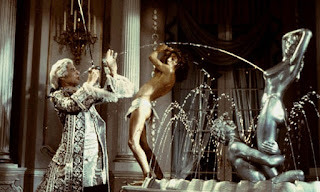
The film sets the tone early as we are introduced to the character in the middle of a sexual seduction with a married woman. Whose encounter is interrupted by her husband and a sword fight happens meanwhile Liszt is mostly naked throughout.
After that we kind of fast forward into little vignettes of surreality that happen throughout the film. W see him perform to roaring crowds of teen girls who all cry and want to touch him as he plays. That is where we are introduced to many composers but mostly It’s Richard Wagner who will become important later in his life and this film.
Next, we see him in domesticity with his wife the woman from the opening scene. Here we see their life played out like a silent film homage to Charlie Chaplin and his leading ladies. Though we know the road and his hedonism will tear away from this seemingly love story bliss.
The early parts of the film play more like a traditional biofilm as far as pace and l learning about the character. Once he decides to become an abbey and therefore more religious while still maintaining His monstrous libido. The film takes a strange turn that allows for the return of Richard Wagner as a kind of vampire. Who decides to build his own Aryan Frankenstein
At that point, the film becomes more of a surreal fantasy film with history and politics thrown in. As with most Ken Russell films you never quite know what you are going to get, but it will be original and quite shocking. As he is a provocateur.
He made many biographical films about composers. This is one of the mroe outrageous ones. Where he tries to make it fun and a kind fi satire. Though can admit at the beginning it is kind of slow but as the film goes along he keeps building the scenes and sets. So that by the end you can’t help but watch in awe. He doesn’t always hit his targets, but he gets close often.
It’s hard to believe but at a certain point, the film becomes somewhat predictable for the most part. Though offers plenty of homages and allegories
The music throughout is actually Franz Liszt’s compositions only with added lyrics to make them mroe modern songs that express emotions. Which isn’t needed and doesn’t exactly work. As it is like trying to update masterpieces.
This film doesn’t reach the heights of TOMMY, maybe because this film is forced to stay within certain boundaries when it comes to facts. While it doesn’t seem to have as much Joy and deeper meaning as that film. This is quite a nice attempt at offering something different and artistic. Even with the melancholy sadness that the film Carries at times
Directed & Edited By: Bernard Rose Written By: Bernard Rose & Lisa Enos Based on the novel “THE DEATH OF IVAN ILYICH” By: Leo Tolstoy Cinematography: Bernard Rose & Ron Forsythe
Cast: Danny Huston, Peter Weller, Lisa Enos, Angela Featherstone, Valeria Golino, Joanne Duckman, James Merendino, Tiffani Amber Theissen, Heidi Jo Markel
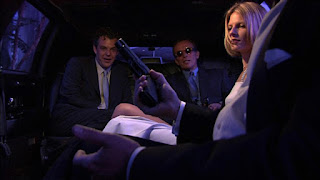
Ivan Beckman, Hollywood’s most sought-after talent agent, the darling and the crown prince of La-La Land is dead. How and why did it happen? Was it drugs, murder or excess, or perhaps something altogether more mundane? We begin with an ending and then catapult back a number of days to the apex of Ivan’s brilliant career as he bags international megastar Don West onto his company’s books, and then charts the highs, lows (and they are so very low), and extreme excesses of his final days.
This is purely an exclusively Hollywood type of excess and burning out on overindulgence. As we watch a character. An agent self implodes starting with the aftermath then we watch as we are taken to the beginning of what leads to this all those enablers and so-called friends.
Danny Huston gives a career-best performance (so far) in the lead
This is an early example of experimental filmmaking used by a major director (Bernard Rose) where it seems like the filming was done with shaky camcorders at the time. This gives the film and performances an intimacy that makes it feel claustrophobic but also everything more plain abs basic without any kind of Hollywood shine. As most of the characters are shallow, selfish, or scuzzy with a shiny veneer to themselves.
This experimental quality is a style that fellow filmmaker Mike Figgis used so many times that it is partially shocking he not only never made this film, Nor did he ever make a film using this style that made as much as an impact as this film does
One reason this film is less known and buried is that it might have hit a little too close to home for some in Hollywood. As it feels way too true and like it’s Hollywood holding a mirror to itself or aspects of itself and hating that raw image not made up.
This is a film I heard about over the years. It seems to disappear but I heard it was highly recommended. Luckily when re-released on Blu-Ray finally got a chance to watch it and can see why it was so hard to find a great movie but also marvel as for what was made at the time and being kind of honest about parts of the industry.
an early example of using (then) modern cutting edge technology to your advantage. As it saves money but also gives the film an extra dimension you don’t expect.
Seeing the characters at the beginning and their relationships than seeing how they fit into his life before. Feels more real than THE PLAYER not as self-congratulatory. As an inside Hollywood tale more about power.
This film goes well with the film TIMECODE though this is an infinitely better film that feels like its film is less of a gimmick. They match as the year 2000 experimental film. That looked at the Hollywood establishment with a more artistic look that takes the glitz out of Hollywood and offers a pitch black character study. That could easily be seen as a horror film. As we watch the main character break down and essentially torture himself.
In the debauchery, it quickly cuts Shields from most of the actual action. Though an addict seems to go on a bender after being diagnosed with cancer. We get to know the person, so far we only know or hear about In Passing.
An internal conflict coming from a family of artists. While he only represents supposed artists and stars and what they make can barely be considered art
How when he needs the most care and attention he is all alone and lost.
The film is oddly affecting considering one thought it was going to be stronger or worse when it came to content.
The film is a little indulgent towards the end. It is too much of an artistic statement as a kind of signature to the whole endeavor. Though considering what and who they are portraying it might be expected.
This might be why the beginning is the end. So more like an epilogue. Leaving him to his own bell after the loss of death. The last indulgence he might get. As he buried himself and now must be In his own purgatory.
Directed by: Jean-Luc Godard Written by Jean-Luc Godard & Catherine Vimenet Cinematography: Raoul Coutard Editor: Francoise Collin & Chantal Delattre
Cast: Marina Vlady, Anne Duperey, Roger Montsorat, Raoul levy, Jean Narboni
In this film, ‘Her’ refers to both Paris, the character of Juliette Janson, and the actress playing her, Marina Vlady. The film is a kind of dramatized documentary, illustrating and exaggerating the emotionless lives of characters in the new Paris of the 60s, where commercialism mocks families getting by on small incomes, where prostitution is a moneyspinning option, and where people are coldly resigned and immune to the human nightmares of Vietnam, and impending Atomic war.
When it comes to the films of Writer-Director Jean Luc Godard you never know what you are going to get. Sometimes you get absolute masterpieces at other times you get films you respect but might not love and then you get his more experimental films that can go either way. Sort of what it seems like Modern director Steven Soderbergh attempts.
Though both of their films can be off-putting for certain audiences. It might feel like most of those cinema comes off as pretentious.
This is one of the later films. Where he fills the film with beautiful women who keep your interest especially in close-ups but then the rest of the film is pretty much philosophical notions and existential discussions that become quite boring and superficial.
Where the genius lies is that he puts all of these speeches and interviews. While following certain characters. So that we examine their day-to-day experiences and living conditions. Then inserts the interviews and discussion. As well as his own whispered narrations asking us to question what we see and ponder them in different ways.
This is pretty much an experimental film all around. At times we see the characters off the wall characteristics. Like reading randomly from a stack of books while a friend writes down what they are quoting. Or a photojournalist dressed in an American flag t-shirt interviewing two women he has paid to undress in front of him while he asks questions and boats of his adventures.
All of this is indebted to the politics at the time. Which instantly dates the film and radicalizes it to a degree. While trying to add cinematic tricks and observation. That it comes off more like a lesson than an experience.
As even at times the director seems to interview people off the street who we never see. Where the footage becomes a scattershot. Other than showing constant construction.
Which we never see what came before or after.
It/‘a a film that is full of ideas and its heart seeks to be in the right place but to a degree feels empty. Where emotions should be.
The film seems to try and show it’s Characters are used to their lives. So they have no reason to emote or seem like they are seeking to strive or escape. They just deal with the everyday.
Even with a title that seems like the film will focus on the lead female. As we try to get to know her and become obsessed with her. Showing her in all her glory. Instead, she is just part of the overall who we occasionally see. Though she is the most constant.
The film or filmmaker wants us to know certain things about her but also expose her to the audience in all aspects. So that while we might fall for her we also know her. So that here is some kind of relatability but the end. Even if it just feels like a movie of expression wanting to say something yet cramming as much different stuff that connects into the tale and trying to decipher it all.



 Cut To The Chase