Cast: Anne Hathaway, Michaela Coel, Fka Twigs, Hunter Shaffer, Sian Clifford, Jessica Brown Findlay, Kaia Gerber, Alba Baptists
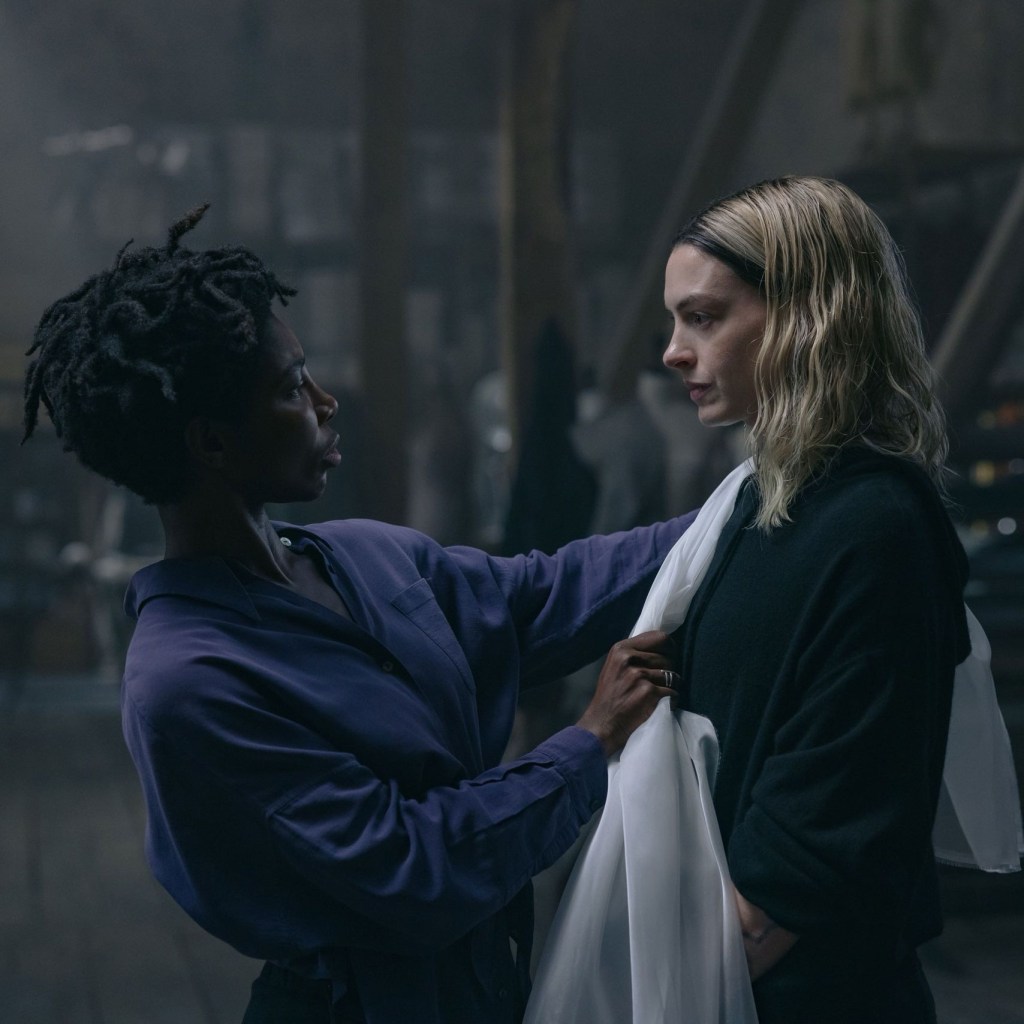
Long-buried wounds rise to the surface when iconic pop star Mother Mary reunites with her estranged best friend and former costume designer, Sam Anselm, on the eve of her comeback performance.
This is a movie that one didn’t dislike and found fascination at times within it, though at some parts of the film, found myself struggling to meet the film, even halfway
There’s clearly a lot happening here, and I admire what writer-director David Lowery is trying to do. The acting is strong, the visuals are inventive, and even the situations themselves feel inspired. There’s a real dramatic idea underneath all of it. The problem is that, somewhere along the way, you start wondering why are you still sitting here waiting for it to fully arrive.
The first half really catches you attention. There’s an energy and mystery to it that makes one curious about where it was going. But by the middle, that curiosity began turning into patience. The second half starts to feel a little empty and monotonous, and while the film continues to look beautiful, the visuals sometimes feel like they’re doing more of the heavy lifting than the story.
And yet, I can’t say I didn’t appreciate it.
This is essentially constructed like a play: a limited location, a handful of actors, and a story that depends heavily on the relationships between them. But Lowery finds clever ways to make the world feel larger than the space we’re actually in. There’s imagination here, and I have to applaud that. This is clearly one of those more personal, artistic projects where a filmmaker is allowed to follow his instincts rather than simply give us what we expect.
The film also leaves plenty of room for interpretation. You can read it as a story about collaboration, ambition, loss, regret, or the complicated ways people remain connected even after they’ve spent years apart. There’s a particularly interesting feeling of loss running underneath everything. The sense that these characters have both lost something important and are still trying to figure out whether they can somehow get a piece of it back.
And then there’s Michaela Coel, who is fantastic.
She has a presence that immediately pulls you in, and she gives the film an emotional center that it desperately needs. I honestly just want to see Michaela Coel in more things. She’s one of those performers who can make you interested simply by watching her think. She walks away with the movie. As I am a fan of her other work, obviously
I really wanted to love this film. I admire its ambition, its originality, and the fact that it actually has something to say. I just wish there were more movie in between all those ideas.
Maybe that’s partly on me. This is the kind of film that asks you to meet it on its own terms, sit with its rhythms, and decide for yourself what it means. And perhaps I simply wasn’t in the mood for that particular challenge.
I can absolutely see myself revisiting the film years from now and appreciating it differently. It’s divisive, certainly, but it’s also the kind of film that gives people something to argue about afterward and honestly, I’ll take that over a movie I completely forget five minutes after leaving the theater.
So while I respect what Mother Mary is attempting, and I genuinely admire the vision behind it, I can’t quite give it the glowing review I wanted to.
It’s ambitious. It’s beautiful. It’s original. I just wish it had given me a little more to hold onto.
Based on the Novel “WHAT ARE YOU GOING THROUGH” By: Sigrid Nunez
Cinematography: Edu Grau
Editor: Teresa Font
Cast: Tilda Swinton, Julianne Moore, John Turturro, Alessandro Nivola, Juan Diego Botto, Alex Hogh Andersen, Victoria Luengo, Esther McGregor
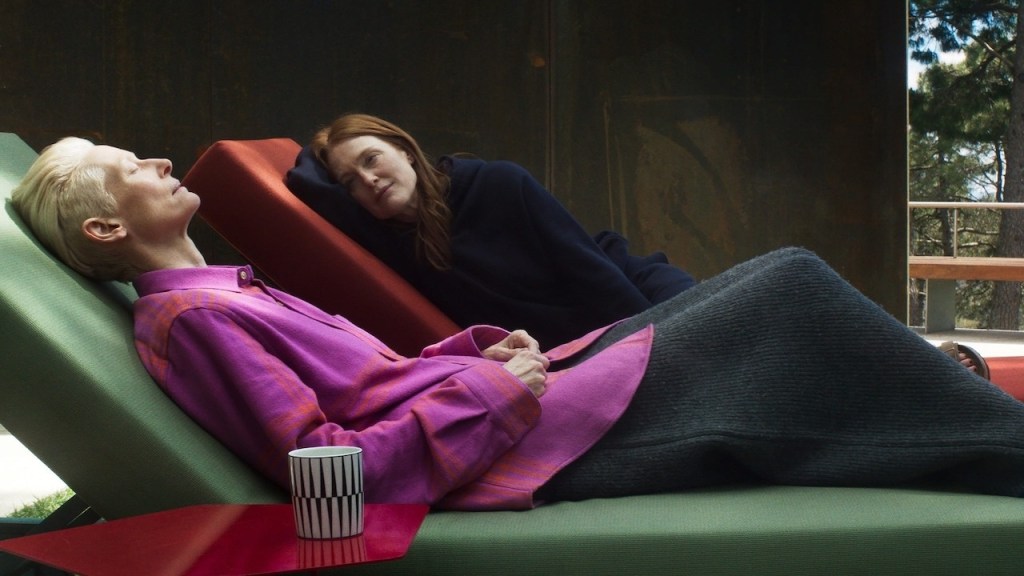
Ingrid and Martha were close friends in their youth, when they worked together at the same magazine. After years of being out of touch, they meet again in an extreme but strangely sweet situation.
This isn’t a bad film. In fact, it’s almost frustrating that it isn’t, because there’s so much to admire here, and yet so little that I actually connected with.
Every frame is beautiful. The colors, compositions, interiors, costumes, and carefully chosen shots often look like paintings. There’s a rhythm to it, too, almost like a beautifully directed stage production. But after a while, It started feeling less like one was watching a movie and more like I was visiting a very expensive museum exhibit And while appreciated, just wasn’t necessarily having a good time.
The biggest problem for me is that the dialogue often feels written rather than spoken. The characters seem to deliver information rather than reveal emotion. It’s almost like reading a very wordy novel where the author tells you everything, leaving you to create the images and feelings yourself. Except this is a movie Qqand Pedro Almodóvar is giving us all those images already.
There are moments of genuine beauty and meaning, but emotionally, the film feels strangely cold. Almost like a modern 1950s melodrama that forgot to turn up the melodrama.
And that’s particularly disappointing because Almodóvar is one of my favorite filmmakers. He has always had this wonderful ability to make chaos feel ordinary, make the mundane feel fascinating, and turn emotional extremes into something colorful, funny, messy, and alive.
Here, everything feels much more controlled.
Almost too controlled.
The film eventually becomes monotonous, like listening to someone tell you a story when you keep waiting for them to finally get to the point and then realizing you’re not particularly interested in the point.
I also couldn’t shake the feeling that this was partly an appreciation piece for its two magnificent leading actresses. If you’re already a fan of them, there’s plenty here to admire. And honestly, they deserve to be celebrated. But the movie sometimes feels more devoted to their presence than interested in giving us something emotionally involving around them.
It’s gorgeous. It’s sophisticated. It’s carefully constructed. There’s absolutely nothing technically wrong with it And maybe that’s the problem.
I kept waiting for the movie to surprise me, move me, shake me or at least make me feel something beyond “That’s a lovely shot.”
It almost feels like watching a Vogue fashion spread: beautifully designed, impeccably photographed, sophisticated enough to discuss over cocktails, but after a while you’re wondering where the actual story went.
Ultimately, The film feels like a film to study, admire, dissect, and appreciate more than one to simply enjoy And maybe that’s exactly what Almodóvar intended.
But for me, it was like going on a date with someone who has plenty of qualities you admire. They’re intelligent, beautiful, interesting, accomplished, and probably wonderful to other people. There just isn’t any chemistry. So you wish them well And if everyone else wants to rave about them, I won’t argue.
Though by the end if you can afford it. You want to know who the interior designer and costume designer were. As those are immaculate.
Cast: Maya Da Costa, Myra Molloy, Zach Braff, Levon Hawke, Alozie LaRose, Sierra Sidwell, Hunter Dillon, Sophia Carriere, Alexa Mareka
Coley, 17, from rural Oregon, navigates intimacy after her mother’s passing. Meeting Sonya sparks new feelings, but self-doubt hinders their connection. Sonya, unfamiliar with dating girls, is uncertain. They learn to embrace emotions.
The film is light and airy feeling like a perfect summer romance
A nostalgic throwback that feels modern but yet would fit in the early 2000’s in which it’s set
Wondering if it is autobiographical fantasy for the Writer- Director Hayley Kioko from her song and music video it seems a full length feature extension from.
It works as a typical romantic film that just happens to be queer or a queer awakening film that lends itself more to a paperback romantic novel origins. As the film feels like, The type that this is adapted from by the writer director who also wrote the original novel.
The films easy to watch you can’t help but route for the main characters and their back stories are handled with care that seem to be heavy and emotion, but very light material wise all the two girls bond and are left in their own world. There is no bullying there doesn’t seem to be prejudice from any friends or family so really the only challenge throughout the film seems to be being emotionally available and open to one another and trust there’s nothing or no one in the outside world really challenging this romance.
As throughout the film, it seems like the main character played By Maya Da Costa seems to be the one who is facing the most challenge of letting go and growing up and living her life and not staying mentally in her sorrow.
It also doesn’t hurt that everything in this film is very pretty. So there’s nothing that’s ugly or mean spirited and there’s nothing bad to look at as most of the cast is beautiful as are the locations and the town that they’re staying in. The cast is lovingly diverse. It’s one of those dream towns where everyone seems cool with everything. No prejudice, no class struggles, no bigotry. So the film won’t offend anyone and one can see why some might be attracted to it.
There is a slightly romantic rival, and once they are with them instead of the scenes, seeming as romantic beautifully shot and intense, there’s a coldness in a practicality that feels cold and a little bit of disgust.
It’s an assured debut by Director, Hayley Kioko, who keeps it light and sweet with a little bit of death and is quite assured behind the camera as an actress and musician. She seems to have learned and picked up the necessary skill and await what her next film will be here she shows she has the goods to continue along this path.
Happy this got a limited release theatrically though really the material feels more like a streaming or the type that these days would be more streaming original only because it’s a little more lightweight, which isn’t unexpected watching the trailer
Written By: Art Camacho, James Dean Simington, Javier Reyna and Koji Steven Sakai
Cinematography: Brandon Ruiz
Editor: Rylan Rafferty
Cast: Dermot Mulroney, Jeff Fahey, Mauricio Mendoza, Melissa Diaz, Keisa Elwin, Tonantzin Esparza, Texas Battle, Manu Intiraymi
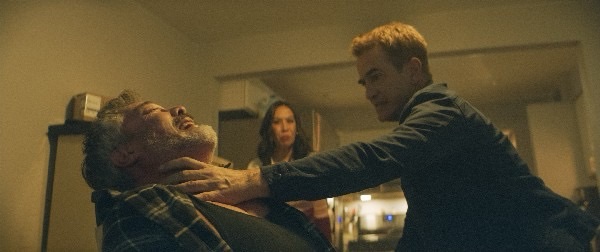
A high school coach, whose teenage daughter was murdered, takes matters into his own hands by going after the men who kidnapped his student for their human trafficking operation.
it’s rare to see Dermot Mulroney play a leading role and it’s definitely a rarity for him to play in action hero leading role. At first being a vigilante and then it seems like seeking revenge and to tell you the truth this film feels like it was more written for Steven Seagal, only because Dermot Mulroney‘s character seems to have no sense of humor is always straight to the point and has a hankering for loving to break arms, wrists, rather than just go for the kill which becomes a kind of dark humor flight in this world
The rest of the story is paint by numbers and mostly predictable. It does offer a few little twist towards the end, but for the most part, you know what’s going to happen. This film also has to have a record for most people injured, but not killed in an action film b on-screen.
This is the type of film that would’ve played on a Friday or Saturday night on HBO as an original action film for them, though it might’ve had a few more stars in the film other than Moroney and Jeff Fahey. Which might be why I have a particular weakness for the film as it’s kind of nostalgic for me at least.
There are many scenes and this film that are over the top and a bit ridiculous that only add to making this a guilty pleasure. I didn’t say a guilty pleasure but definitely a guilty pleasure as it gets more silly as it seems to go along now Moroney is perfectly cast in the lead role and you just wish the script was there for him a bit more and support in store.
As one wouldn’t mind seeing a sequel to this chest, hopefully a little bit stronger in the writing as this film would’ve been more of a showcase if we had more regular or had as many action heroes from the past nowadays it’s more about actors so they are the new action heroes but they wanna show range and not in that position. They didn’t mind trying to stretch, but they knew what their job was and the roles they were most likely always going to get.
Can’t really say that any action sequences are that memorable they’re believable enough, even though in some you can see the Korea geography, and the waiting for the hit to be thrown and for some that will make it more realistic, and for others, they’ll seem too slow and unstylish as they don’t like to see the seems
If you’re just looking for something that’s entertaining, it isn’t really gonna make you think and you’re just a really bad Dermot Mulroney fan. This is the movie for you.
Cast: Lisa Delaware, Jean Mercure, Jacques Spiesser, Catherine Ferran, Jean-Paul Roussillon, Sabrina Leurgoin, Daniel Rialet, Evelyn Dipi
Told from a dogs perspective – the titular Baxter is moved from one owner to another, seemingly never being a good fit for anyone.
Have you ever watched a movie that is so good you have no desire to really ever watch it again yet you would still recommend it. Well, this is one of those movies for me. Kept me watching with fear and anticipation until the end. Leave it to the French.
I was hoping that the recently released film GOOD BOY, would be on the level of this film while I found that film disappointing this was better than I could’ve ever expected as it kind of feels like it’s own version of the film MAN BITES DOG, though not as disturbing, but disturbing in its own way. Though this film could be watched with films such as WHITE DOG and WHITE GOD. Why all these films have White in the title? You’ll have to watch them and see.
This movie is a very depressing indefinitely disturbing though it never shows any violence throughout more leaving it suggested until the third act.
Throughout the film, you know where it is going but not how it will get there or what it will do when it does and you kind of hope that it might steer itself somewhere else as we get to know the next inheritors of the dog and can instantly spot their weaknesses and vulnerability. especially as he seems to more go after the innocent, lonely, weak and trusting. All those that used to be sacred in films of the past or even of the films time period in which it was made.
Fell through throughout was thankful it didn’t go some places that were expected. As one feels sorry for most of the characters
they keep in mind as one get older films like this bother me. They aren’t exactly for me anymore, but they’re watching it. It definitely inspired a reaction and kept me watching which can be rare when it comes to certain films
The film disturbed me yet want to read. It’s original source material. A 1970s American horror. Novel. Not shocked that one of the Screenwriter was future award-winning filmmaker Jacques Audiard (DHEEPAN)
I thought the film would be more an ensemble episodic anthology movie, Sort of like the movie WEINER DOG with less quirky comedy. Which then again makes me wonder if Todd Solondz was inspired by this movie even as this stays more in a certain community in the neighborhood.
The ending is disturbing and sad as it shows a kind of legacy that will continue in its own one.
Writer-Director John Waters put this on his list of favorite films that will corrupt you when he had an all two brief movie review show of his own
Which ends up being true as by the end, you are scared and feel a bit guilty as a film is going to make you feel something with barely having a Music score to guide you. It’s not flashy stylistically it’s definitely challenging and seek to instigate as you are a fly on the wall throughout and is going to take you with it willingly or even if it has to drag you unwillingly
Cast Sergi Lopez, Bruno Nunez Arjona, Stefania Gadda, Joshua Liam Henderson, Richard Bellamy, Tonin Janvier, Jade Oukid, Ahmed Abbou
A father, accompanied by his son, goes looking for his missing daughter in North Africa.
Please watch this film before anyone can spoil any of it for you.
There is so much one wants to say about this film
This film is more of an experience. All its own. Then something you just watch and rate. As it makes you Feel many things throughout.
Perfectly titled, as it truly lives up to its appetite, which you truly only understand by the end
Imagine a movie centered around and filmed a club or on MTV spring break centering on the dance floor and dancers as well as the music only with a loose plot to interact with the dancing and Revels. Throughout broken up scenes and establishing shots of actual actors done for that you are here for you or spontaneous things happen or caught on camera. Like the movie CLIMAX
Only here Based around the main characters of father and son looking for their missing daughters/sister, which keeps it from being an on the ground documentary so more staged docudrama.
That is what I thought this film would be until it finally bared down and focused after I would say the first 15 to 20 minutes
What we do end up getting is a film that is useful less stylized and more radical. That is a road movie based around ongoing road trip through back roads in the desert. As the film plays like a tempo with brakes between tracks.
The characters, other than the lead, father and son, the so-called ravens are not the Hollywood version. These are more not only international, but older and middle aged as well as weathered characters who just seemed to go with the flow of life some disabled some just lost so I’m looking for the next party or to see where the wind takes them so they form a kind of loose knit family themselves.
The film is kind of a thrill throughout as you never know where it’s going and where we are going with these characters. It becomes hypnotic .
The film does manage to be shocking. As it doesn’t go where expected. Especially when you think you know how everything is gonna play out, which is one of the reasons one believes they got nominated for best foreign film, other than just its unpredictable mnature. Presented as a loss journey that is surprisingly emotional, though never allows itself to be sentimental as it is unflinching.
The film is a kind of unknown suicide mission of sorts that no one knows they are voluntarily going on though always seems to want to have hope even in the worst situations. A dance through hell
As the desert situations can be beautiful, but are also dangerous and deadly, so there’s always that threat looming which creates great tension as well as the father, never quite trusting the group at first, even as they seem to come through for him, though also them being quite cautious of him without him being with child certainly helps them to open themselves up more though the film does present us with plenty of worst case scenarios
The film does offer a sucker punch of a third act. As characters we grow to know and care about are threatened. Where we in the audience never truly expect to care so much. Are pushed to the edge. This isn’t a film about a journey but one of acceptance.
This is a truly unforgettable film. That seems like it will be a party, but ends as a nightmare.
Cast: Melissa Boros, Golshifteh Farahani, Tahar Rahim, Emma Mackey, Louai El Amrousy
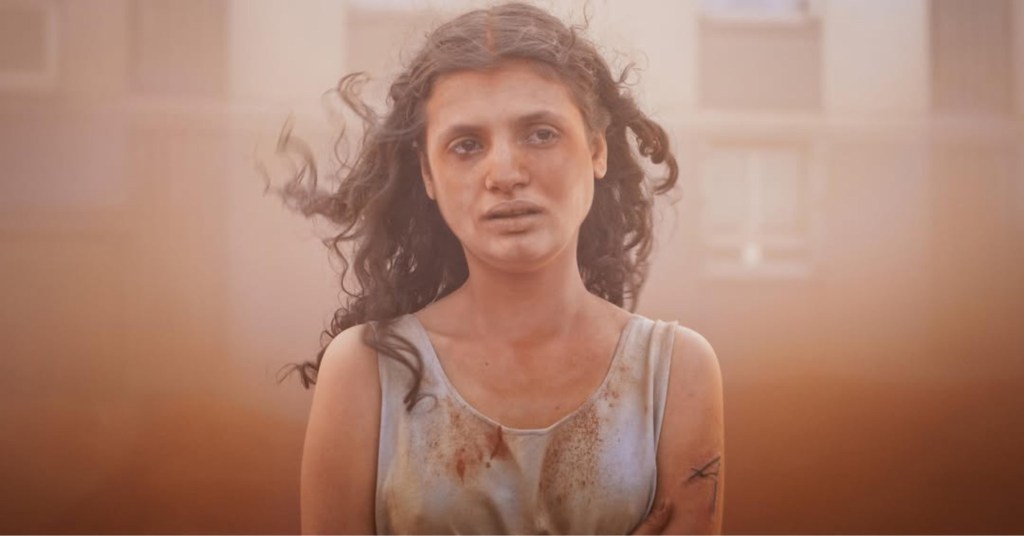
In a French city grappling with an unnamed viral epidemic, 13-year-old Alpha, the daughter of an immigrant doctor, confronts a challenging coming-of-age journey. Her mother, a frontline healthcare worker, is horrified when Alpha allows her classmate and love interest, Adrien, to tattoo her with a shared needle at a party. The resulting bleeding turns Alpha into a social pariah at school, igniting heightened fears of blood contamination among her peers. However, things take a dark turn when Uncle Amin, a person with a chronic substance use disorder, moves back into the family home. This unexpected reunion forces Alpha to share a room with him, further complicating her already strained life.
Alot of people came away from Alpha feeling underwhelmed, calling it just okay, or even a disappointment,but against all odds, I really liked it.
In some ways, it’s overdone. It leans heavily into melodrama, and at times it feels almost overwhelming on purpose, But somehow, that worked on me. I was mesmerized by it, by the mood, the discovery, and the way it slowly reveals itself. Even when I had a sense of where it was going, it kept me interested.
This won’t be for everyone. It’s slower, more emotional, and much more introspective than many might expect. Especially from writer-director Julia Ducournau. If you’re looking for the shock or body-horror intensity of RAW or TITANE may feel restrained by comparison. But that restraint is part of what makes it fascinating.
The visuals are still unmistakably hers, sharp, beautiful, occasionally surreal, but they never feel flashy just for the sake of it. They serve the emotion. The film’s central allegory, with its mysterious virus that slowly turns people into marble statues that bleed sand, is an obvious but powerful reflection on illness, grief, and specifically the AIDS crisis.
This isn’t really a genre film, so much as a drama dressed in genre clothing. It’s less interested in shocking you than in sitting with discomfort, fragility, and loss. It may not always know exactly what it wants to say, but it remains compelling as a study of its themes and characters.
And yes, maybe it goes a little too far with the melodrama, perhaps to compensate for a story that feels thinner than its ideas. But even then, it never lost me.
To show how far, she has gone from her usual. The film doesn’t even have actress Garance Marillier who is. Usually in all of her work so far
It’s not my favorite film from Julia Ducournau, but it might be her most personal. And sometimes a film doesn’t need to be perfect to leave an impression. it just needs to feel singular. This film certainly does
Based on the Motion Picture “SENTIMENTAL” By: Cesc Gay
Cinematography: Adam Newport-Berra
Editor: Anthony Boys and Yorgos Mavropsaridis
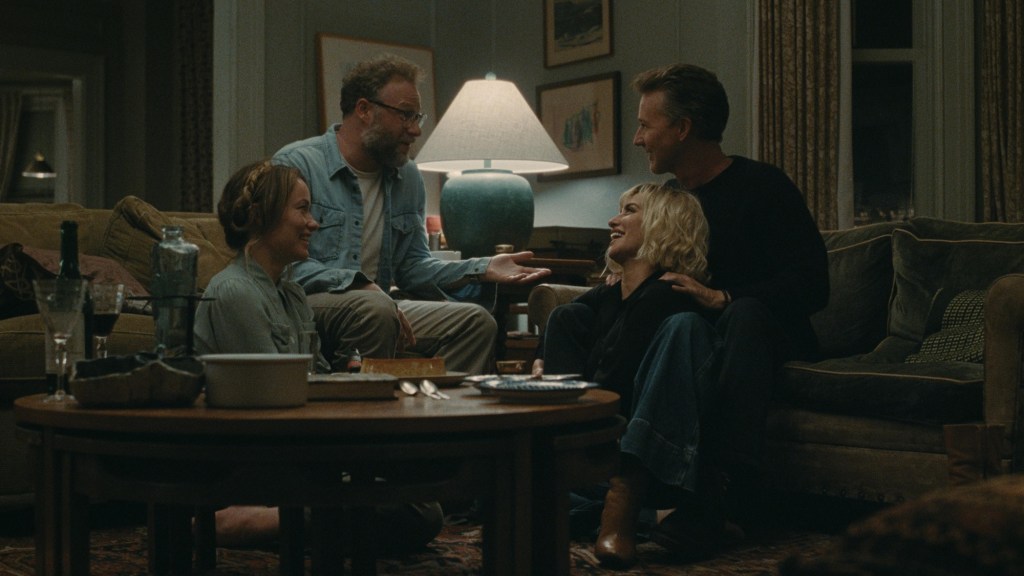
Cast: Olivia Wilde, Penelope Cruz, Seth Rogen, Edward Norton
Joe and Angela’s marriage is on thin ice. When they invite their enigmatic upstairs neighbors for a dinner party, the night spirals into unexpected places.
This movie reminded me of something rather embarrassing. I have never been to a dinner party.
I’ve always wanted to be invited to one. Maybe one day, if I ever have a place of my own, I’ll throw one myself. Until then, all I really know about dinner parties comes from movies, television, and books. If they’re anything like this one… sign me up. Hopefully just with slightly less emotional damage.
This feels like a genuine comeback for Olivia Wilde as a director. It reminds you just how talented she is when she’s focused less on genre and spectacle, and more on people. Relationships, insecurities, attraction, jealousy, longing, you know those messy little emotions that make us human.
The film is a loving throwback to the intimate relationship dramas that flourished from the 1960s through the 1980s. You can immediately feel the DNA of WHO’S AFRAID OF VIRGINIA WOLFE and BOB & CAROL & TED & ALICE. It’s refreshing to see a movie made for adults that lets conversations become the action.
The smartest thing the film does is invite you into the story without revealing its hand. Whether you know the premise or go in completely blind, you’re pulled in by the seductive setup and the chemistry between the characters. As the evening unfolds, what begins as playful curiosity slowly transforms into something heavier, more emotionally revealing, and surprisingly tense. Yet the film always keeps a sense of humor tucked away in its back pocket.
Every actor is working at the top of their game, and each performance is an essential ingredient in what makes the film work.
Olivia Wilde is especially impressive, both behind and in front of the camera. She plays the anxious, seemingly ordinary half of a married couple stuck in a comfortable rut with Seth Rogen. It’s fascinating watching the dynamic evolve. To each other they’ve become familiar, almost invisible. But through someone else’s eyes, they suddenly become attractive again. The film cleverly explores how desire and perception change depending on who’s looking.
The entire movie feels like a beautifully staged play. I honestly assumed it was an original screenplay because it feels so confident and distinct. Finding out it’s actually adapted from a foreign film that’s already been remade several times was surprising. Even so, this version feels completely fresh and confidently stands on its own.
It’s bold without trying too hard. Provocative without becoming cynical. Underneath all the awkwardness, emotional chaos, and uncomfortable conversations is an oddly wholesome innocence about people simply wanting to reconnect with themselves, their partners, and the lives they’ve built.
At times the film almost plays like an emotional thriller. There isn’t a killer hiding in the house, just vulnerability, desire, regret, and the fear of saying the quiet part out loud. Somehow that’s even more suspenseful.
Even the soundtrack echoes the films that inspired it. It captures that sophisticated, simmering mood where something has been bubbling beneath the surface all evening, and you’re simply waiting for it to finally boil over.
The Invite is funny, sexy, awkward, revealing, and emotionally honest. It’s the kind of intelligent adult drama Hollywood used to make all the time and one I hope becomes fashionable again.
Inspired By “KIND HEARTS AND CORONETS” Screenplay By: Robert Hammer and John Dighton
Based On the Novel “ISRAEL RANK” By: Roy Horniman
Cinematography: Todd Ranhazl
Editor: Harrison Atkins
Cast: Glen Powell, Jessica Henwick, Margaret Qualley, Bill Camp, Ed Harris, Topher Grace, Zach Woods, Phumi Tau, Stevel Marc
Disowned at birth by his obscenely wealthy family, a blue-collar stop at nothing to reclaim his inheritance, no matter how many relatives stand in his way.
This is a loose remake or more a modern retelling of the Alec Guinness film KIND HEARTS & CORONETS only set more realistically and taking out the gimmick of that film years ago. Where Alec Guinness played all the members of the family that was getting killed off.
It might have been an added incentive if this film had big stars making cameos as members of the family getting killed off, but only Topher Grace is recognizable as one of the kin in standing to inherit a fortune above out protagonist.
So the film really adds nothing except instead of being an outright comedy. It’s dark and slick. It attempts to be a social satire. Though never quite feels sharp enough. In fact at times it feels oddly rushed.
The film is darkly comedic and isn’t as bad as one would think. Considering how little fanfare or promotion the film got. Which the studio seemed to have cold feet after Glen Powell started in THE RUNNING MAN reboot that bombed. I don’t even remember seeing a trailer for this film. Until I had to go out and find it online myself.
The film plays pretty standard items entertaining as you watch but barely sticks with you once done. This fits in with the disposable films of yesteryear that were good enough for a watch and are rewatchable but therebisnMt much to them except for entertainment.
This film seems like it’s going to be a crowd pelaser until the end where it stays with it’s cynicism.
Strangely enough Glen Powell, plays a likable killer. That feels like he has shades of Patrick Bateman possibilities but is never that much of a sociopath or psychopath and had his reasons for his actions.
Margaret Qualley is a good femme fatale only because we barely know anything about her and comes across as a mystery but also a type. Though she wears chanel as her wardrobe in all her scenes. That gives you a hint to the heart of her character. Where her legs are all over.
Which is one of the films problems it’s
Likable enough bit has no real depth. The characters are more types. So that it never draws you in. So as it stays on the surface that is what you get and how you feel by the end.
The films screenplay was surprisingly on the 2014 BLACK LIST of scripts that those in the industry rank as the best unproduced they have read that year.
Which drags the film down and makes it feel more and more basic as it goes along. Especially in the end where the irony want to take over. As this is a film that shouldngave high stakes. Yet it all feels very telegraphed.
This feels like a film you would sneak Into after paying and watching another film or that you go to on a weekend, just because you want something to watch.
Cast: Jude Law, Vicky Kirby, Ana De Armas, Sydney Sweeney, Daniel Bruehl, Felix Krammerer, Toby Wallace, Ingracio Gasparini, Richard Roxburgh
Based on a factual account of a group of outsiders who settle on a remote island only to discover their greatest threat isn’t the brutal climate or deadly wildlife, but each other.
I’ve learned nothing from age or experience. When I read a rating description that says graphic nudity and see that a film takes place on a remote island, my brain still lights up like a teenager who thinks cinema is about to deliver. Full frontal. Everyone. Sunburned and symbolic. Instead, Eden plays like a prank pulled by the MPAA: lots of male butts, a wet shirt doing some heavy lifting, and apparently breastfeeding now qualifies as “graphic.” If there’s a support group for grown adults disappointed by misleading rating descriptions, sign me up.
What’s funny is that this misdirection mirrors the film itself. Critics and early buzz framed Eden as something juicier; betrayals, affairs, wife-swapping, maybe even an orgy or two. The implication was that Ron Howard, of all people, was getting daring. That this was Howard pushing himself, trying to shock, or at least stir something beyond polite admiration. What we get instead is a film that flirts with danger and then immediately apologizes for it.
Eden is competently directed, handsomely produced, and based on a true story, three qualities that should theoretically give it weight. We watch a group of people who choose to abandon society and live on a mostly deserted island, arriving at different times for different reasons, only to slowly discover that isolation doesn’t bring enlightenment so much as irritation. They get on each other’s nerves, draw lines, form alliances, and eventually turn on one another. It’s Lord of the Flies adjacent, but with better grooming and a lot more passive aggression.
What complicates things and arguably makes the film more interesting than it intends to be is how clearly it maps onto contemporary racial and political anxieties. The most overtly “evil” figure does get what’s coming to them, but that act becomes the moral rot that spreads to everyone else. The so-called innocents are now tainted, forced to reckon with how far they’ll go to protect what they’ve decided is theirs. The island becomes a parable: for colonization, for gentrification, for what happens when people who see themselves as peaceful pioneers suddenly feel threatened.
Because this is based on a true story, it’s hard to accuse the film outright of bad faith, but it’s also hard to ignore its blind spots. Once again, the darker, Spanish-speaking characters are framed as loud, sexually promiscuous, domineering, and ultimately villainous, while the British and German couples are coded as pilgrims: earnest, fragile, and well-intentioned until pushed too far. The film seems unaware of how familiar this dynamic feels, or how neatly it mirrors modern anxieties about immigration and “who belongs.” If you’re going to villainize certain characters, at least give them dimension. Here, too many feel like ideas rather than people.
Structurally, Eden is odd. It spends much of its first half building toward a second half that never quite deepens what we’ve been shown. We get minimal backstory, and what little we do learn is mostly told to us rather than dramatized. In the Baroness’s case, her past is revealed through a lover in a way that feels meant to shock, but lands flat because it’s so plainly delivered and instantly believable. There’s no real mystery, just information.
The title, of course, refers to the Garden of Eden: a fertile paradise that could have sustained everyone, if only they hadn’t ruined it. And that’s the tragedy here, not just of the characters, but of the film itself. Eden has all the ingredients for something sharper, angrier, or more unsettling. Instead, it settles into respectability.
This feels like a movie that wanted to be Oscar bait or at least Oscar-adjacent. The cast is stacked with respected dramatic actors, with Sydney Sweeney standing out as the lone box-office draw, seemingly happy to be along for the ride. Her role grows in importance as the film progresses, culminating in a quiet tragedy that works more on paper than in practice.
There’s something faintly admirable about this film simply existing. In a climate where everything is either a franchise extension, an algorithm-approved product, or an awards-season personality test, this feels like a movie that was made because someone genuinely wanted to make it. And that someone is Ron Howard: Hollywood’s ultimate steady hand, a director whose career has been defined less by provocation than by craftsmanship. That’s both the film’s greatest strength and its most limiting factor.
The problem isn’t that the film is bad, it isn’t, but that it often feels unsure of who it’s for. Is this meant to be an Academy-friendly legacy piece, the kind that quietly accumulates nominations and polite applause? Is it for history buffs, who might argue it works better as a limited series, where the ideas could breathe rather than be efficiently summarized? Or was it aiming for a broader, prestige-curious audience that no longer really exists in the same way? The film seems caught between these identities, resulting in something that’s respectable, handsomely mounted, and faintly adrift.
Howard directs with his usual classical restraint, which gives the film an old-school texture almost quaint in its pacing and presentation. In another filmmaker’s hands, this material might have been stranger, riskier, or more formally exciting. Here, it’s competent to a fault. When the film reaches for anything risqué or emotionally sharp, it feels slightly self-conscious, like it knows it’s stepping outside its comfort zone and wants credit for the attempt. Nothing lands disastrously, but very little surprises.
Ultimately, this feels like a story Ron Howard wanted to tell and add to his already extensive résumé. a solid, professional entry that might have caused real waves in the ’80s, ’90s, or even the early 2000s. Today, it risks getting lost in the endless churn of content, not because it’s disposable, but because it’s modest in a moment that rewards extremity. Still, there’s value in its existence. It’s a reminder of a kind of filmmaking that’s becoming rare: sincere, controlled, and unconcerned with spectacle. You may not love it, or even remember it vividly, but you’ll likely agree. it didn’t waste your time. And these days, that almost counts as a quiet victory.
This seems to fit in with his more recent films that are a bit dark in its visuals and story, but also have an audience friendly presentation where a normal sea is gained through more traditional family values.
Ana de Armas is the scene stealer but that’s also because she’s the villain and only character who is truly of interest throughout the film. Her character causes most of the drama and through her instructions and actions. The actual action and betrayals of the film happen. Sydney Sweeney’s character only gets to be that way by the end as it ultimately seems like it’s her characters story of growth and maturity.
In the end, Eden is fine. The production is polished, the performances solid, and the intentions sincere. But once the villains exit, so does much of the tension. What remains is a group of attractive people circling their guilt, convinced of their own moral superiority, and slowly realizing they’re not so different from one another after all. It’s not bad. It’s not great. It’s a well-made film that feels oddly lost, unsure whether it wants to provoke, condemn, or simply be admired. And in trying to be all three, it never fully becomes any of them.